

Organic traffic is slipping faster than we imagined with AI searches in the market. Even with strong SEO practices, content might rank, but traffic is still nothing as compared to traditional searches. The challenge here isn’t your content, but generative AI. It is rewriting your content to resolve user intent quickly and stealing your traffic significantly. AI visibility is the new SEO.
To attract attention, trust, and potential conversations, getting mentions by AI has become crucial. Therefore, futureproofing with an AI SEO strategy improves your AI visibility and allows LLMs to keep mentioning your brand to the users. To stay visible in AI, one needs to understand what drives AI visibility and what are the practical ways to improve AI visibility.
What is AI Visibility
AI visibility refers to how discoverable your brand is in LLMs and Google AI Overviews. It is how often these models cite your brand in their responses. Users are significantly relying on LLMs for all their queries. Even Google now provides AI-generated summaries, leading to higher user satisfaction without following the blue links.
With this shift, traditional SEO is losing its relevance and becoming obsolete. In short, brands which are earning citations from the LLMs and Google AI Overviews are the ones getting all the attention and traffic. Further, to get a competitive edge, AI discovery is highly important.
What are the Major AI Search Platforms
Before learning how to become visible in AI, understand which major AI platforms your target audience is searching for answers on.
ChatGPT
Do you know ChatGPT gets approximately 4.61 billion visits per month, with a driving traffic of 0.21%? Needless to say, this is the dominating player in AI-based LLMs. In other words, this is the first stop for users to look for quick and conversational assistance.
Perplexity
This one is smaller, but is growing faster, contributing to 0.02% of global traffic. This platform is perfect for real-time answers, attracting researchers and tech-savvy users.
Google AI Overviews
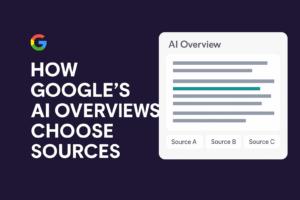
This generative AI drills down to answers from leading pages on SERPs. It is not a separate tool, but an overview that is conversational and provides quick answers to user searches.
When these AI overviews are used, clicks are reduced by 34.5%. Simultaneously, it can also increase organic search impressions on your website, which is generally denoted as great decoupling in the industry, with adequate optimisation.
Factors AI Visibility Depends Upon
Further, several factors determine whether your brand will appear in AI-generated responses. The most critical ones are:
- Semantic relevance – AI models are known for resolving user intent and not just the keywords.
- Topical authority – The LLMs focus on the websites with in-depth knowledge, optimum coverage, and expert views.
- Updated content & crisp facts – Fresh content is the most relevant one. In fast fast-moving industry, stating real facts, and keeping freshness intact plays quite a critical role.
- Format – Content structure matters significantly. Blogs with more pointers, lists, adequate subheadings, and FAQs are more likely to be cited by LLMs.
- Credibility signals – Share reliable stats, earn high authority backlinks, and accelerate transparency.
How to Improve AI Visibility
Write meaningful content
AI tools intend to respond to user queries adequately. To resolve these queries, AI and LLMs go beyond keyword tracking and rely more on conversational content.
- Focus on long-tail keywords, add chat-style FAQs, and ensure semantic relevance.
- Demonstrate EEAT with author bios, accurate info, and follow relevant formats showing up in AI responses. For example, if a user asks about the best AI search visibility tools, Perplexity will most likely cite blogs with lists, comparisons, and conversational blogs.
- Interview experts for trustworthy insights, adapt to one tone and keep it constant wherever possible.
- Highlight outcomes, query-based answers, and, if possible, provide resources.
- Define technical jargon, use videos, images, and audio combined with written content.
- Adding summaries and key takeaways assists AI in grasping value instantly.
Follow technical SEO
- Include long-tail keywords for better on-page optimisation. Include short, descriptive slugs and a conversational title.
- Craft impressive meta descriptions, integrate links naturally, and build backlinks. Use descriptive anchor texts.
- Build shareable assets that naturally attract high-authority backlinks.
- Remove or redirect broken links, outdated addresses, old logos, misinformation, or incorrect descriptions to maintain trust and keep clarity.
- Track down resource lists and claim spots in there.
- Join industry-specific groups on LinkedIn, Reddit, Facebook, and more.
- Update your XML sitemap, audit websites for catching visibility issues, ensure security, and create a clean and crawlable architecture to attract more authority and trustworthiness.
- Make sure pages are loading fast, image sizes are relevant, and your website is not blocking LLM access, as it is a default setting on webpages to block AI platforms.
- Measure and improve Core Web Vitals, add schema, and understand how your pages appear in traditional search results.
- Apply hreflang for multiple locations and language citations.
- Opt for mobile-first and responsive designs.
Regularly update your content
- Ensure your own content is up to date, sync all your social platforms, and if you are on Wikipedia, check the accuracy of the content.
- Take the help of auditing tools and see which pages are underperforming and require updated facts.
- Decaying content notably drops ranking for relevant keywords, leading to decreased traffic and fewer mentions by AI.
- Before you update your content, make sure to visit your competitors and cover untapped topics as well.
- Finally, update your business profile regularly.
Build topical authority
- Identify topic gaps and expand to new queries.
- Focus on creating content hubs. Start by identifying the pillar topic and listing related subtopics.
- Publish original data like surveys, reports, stats, and attract rich backlinks.
- Find questions you can answer, such as “How much SaaS platform cost?” using Ahrefs keyword explorer, people also ask, and answer the public like platform.
- Create an SEO topical map to drive potential traffic.
- Update content strategy by prioritising AI-based opportunities and identifying pages that should be cited but are not. Fill gaps there.
- Lastly, also update pages that are frequently cited and strengthen the business value every 3 months.
Monitor and fix credibility issues
- Set up tools for measuring your website traffic. Track organic, paid, and AI performances to find the actual position.
- Measure brand awareness with centralizing reporting.
- Prepare a Google Search Console account and get authentic insights on indexing, crawlability, and performance issues.
- Monitor keyword momentum in top ranking spots to spot meaningful gains and losses.
- Track backlinks and unlinked mentions. Request linking with unlinked mentions.
- Filter queries and responses from your brands and how often they reccur.
- Optimise location pages and strengthen your local rankings.
- Keep data standardisation across various platforms.
- Regularly audit top pages and improve their accuracy.
- Remove old addresses, phone numbers, inconsistent taglines, and low-authority mentions.
- Apply for industry recognition and awards to perceive authority, credibility, and visibility.
- Monitor core pages like the homepage for ensuring branding is consistent and showcase trust with reviews, testimonials, awards, and other trust-building factors.
- Identify if you need paid ads and bidding on competitive keywords for increasing brand awareness.
How to Measure Your AI Visibility
Measuring your AI search visibility continuously allows you to fix it on time and get an opportunity to stand out with a proactive SEO strategy. One can either track manually or use AI visibility tools for accurate measuring.
Manual Tracking
- Identify questions that users ask most frequently.
- Run these queries in various models for a deeper understanding. Spot which brand is recurring in AI’s responses, see whether it is a brand mention, understand sentiment while you skim through the answer, identify the pattern used, and mark where the competitor is being positioned.
- Calculate score based on:
- Visibility = prompts where your brand is mentioned/total prompts
- Brand mentions = total number of times your brand has appeared
- Sentiment score = +1 for positive and -1 for negative
- Citation rate = Citation to your sit/ total citations
- Share of voice = your mentions/ total mentions across brands
- Prioritise which prompts matter the most for you. Identify gaps where your rivals are visible, and address negative sentiment.
Tool-based Tracking
While manual tracking is impressive, it consumes a lot of time. Whereas tool-based tracking streamlines the process and delivers exceptional results with a basic setup. Moreover, get real-time updates and take early actions to rectify brand positioning. Maintain accuracy and keep up with trends with the top 11 AI visibility tools to choose from.
Final Thoughts
AI is the next opportunity to boost traffic, and platforms like Google AI Overviews, Bing’s AI-powered summaries, ChatGPT, etc., are shaping how users are discovering content. With an intention to improve user experience, these tools are weighing in more factors than matching exact keywords. The major focus is on relevance, accuracy, and clarity. This shift here has opened an opportunity to reclaim lost traffic and strengthen digital presence. By optimizing your content structure, building topical authority, and evaluating other factors that matter. Adapt early to this change and improve your AI visibility.